The All-In-One
Fertility Management Solution
Radicle Summit 2026
What to Expect
Better fertility management starts with a soil sample that truly represents the ground around it. Sample locations should account for changes in soil type, elevation, drainage, tillage and fertilizer placement rather than landing on transition areas that can produce misleading results. The number and distribution of cores matter, too. Our research found that increasing from 6 to 12 cores reduced sampling variability, while no-till and banded-fertilizer systems required even greater care. Consistent sampling depth and timing, along with thoroughly mixing every core in a composite sample, can give farmers a more dependable starting point for fertilizer decisions. Using the Radicle App’s hybrid sampling approach similarly combines the efficiency of grids with management zones that better capture field variability.
Research from Illinois also shows why soil test results should not be treated as fixed numbers. Critical phosphorus and potassium levels can change depending on whether samples are collected in the fall or spring, and the amount of fertilizer needed to move a soil test value can vary significantly by the starting nutrient level and soil type. A low-testing soil may require more fertilizer than a standard recommendation predicts just to raise the soil test, but that does not always mean the full buildup rate is needed to protect yield this season. Farmers can use crop response, fertilizer cost, soil test confidence and their tolerance for risk to set practical rate caps and focus dollars where a profitable response is most likely. This targeted approach can reduce unnecessary nutrient banking while continuing to support yield potential.
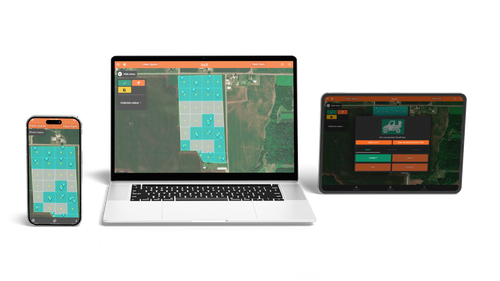
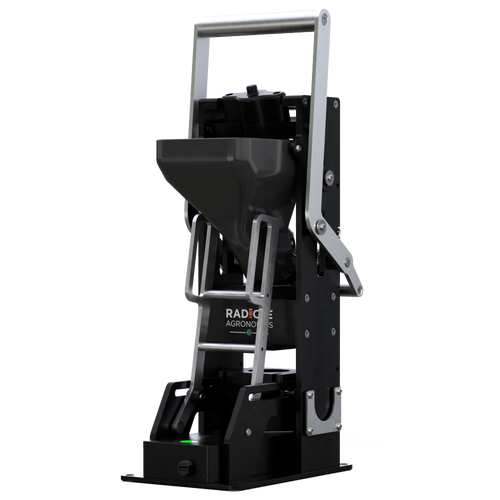
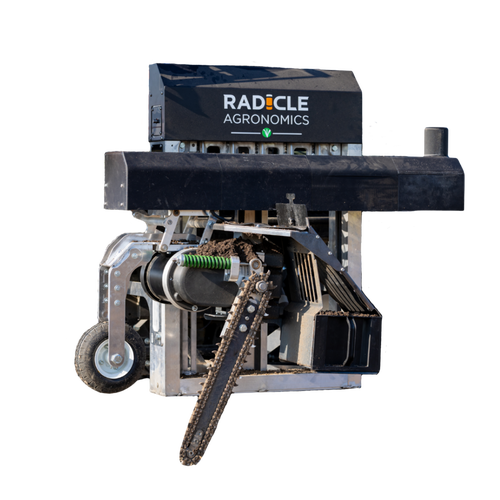
Sample-to-Script™ connects field planning, sample collection, laboratory analysis and prescription creation into one workflow. Farmers and agronomists can use soil maps, topography, management zones and existing field data to improve sample location selection, then review results and compare fertilizer strategies in the Radicle App. GeoPress helps homogenize, package, identify and georeference samples in the field, while Radicle Lab results flow directly into the app for prescription development and other decision making. By keeping the data connected from the first core to the final results map, farmers can better understand what each acre needs, apply less where soil tests are already sufficient, and invest more confidently where nutrients are most likely to pay.
Featured Products
- GeoPress » Field-ready technology that improves sample consistency and efficiency at the point of collection.
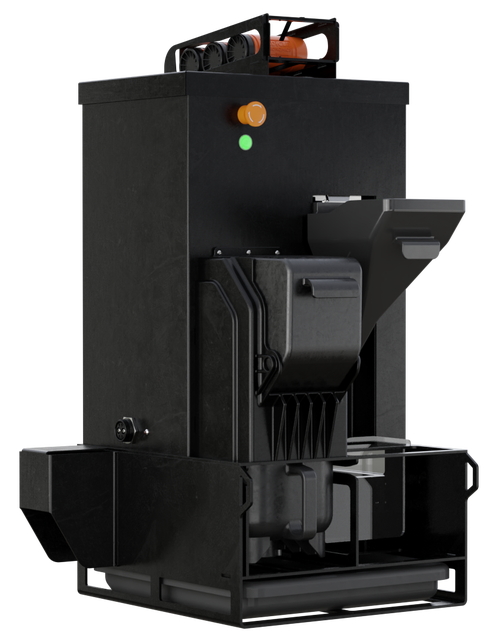
- GeoPress Lite » A manual GeoPress with a smaller footprint, GeoPress Lite pairs easy packaging with automatic labeling in a compact and configurable format.
- Radicle App » A user-friendly platform that connects planning, sampling, and analysis in one place.
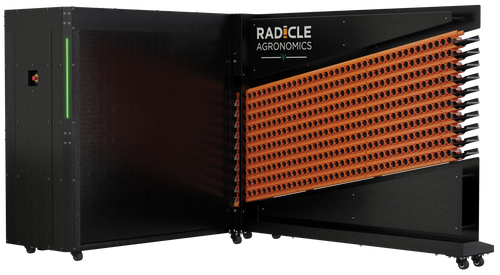
- Radicle Lab » High-powered analysis that delivers reliable data to inform smarter decisions.