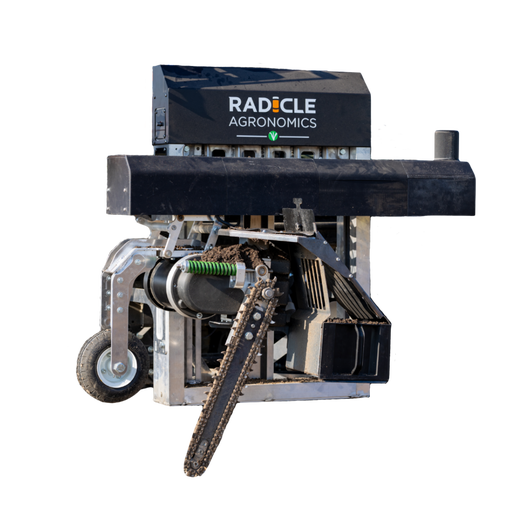
GeoKnife
Sample a cross-section of your soil profile
Fertilizer bands, nutrient stratification and differences in manual coring can make it difficult to collect a soil sample that accurately represents the field. GeoKnife mechanically collects a uniform cross-section of soil at a controlled depth, helping reduce sample variability while making high-volume sampling more efficient.
Efficient, high-volume soil sampling
In about the same time it takes to collect six cores by hand, GeoKnife collects and combines soil equal to approximately 48 cores. The result is more soil, consistent depth and better representation for the fertility decisions that follow.
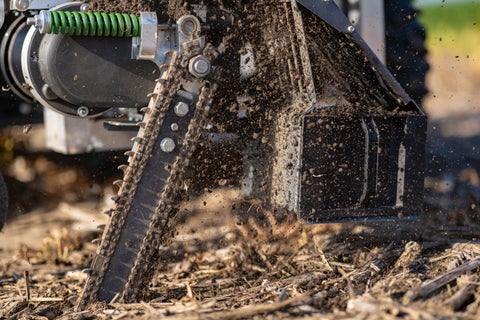
Collect a consistent cross-section of soil
Traditional soil probes collect soil from a small point within the field. If that core lands in a concentrated fertilizer band, misses the band, or is pulled at an inconsistent depth, the sample may not accurately represent the surrounding area. GeoKnife addresses that variability by collecting a continuous cross-section of soil across the row at a controlled depth.
Revolutionary Design
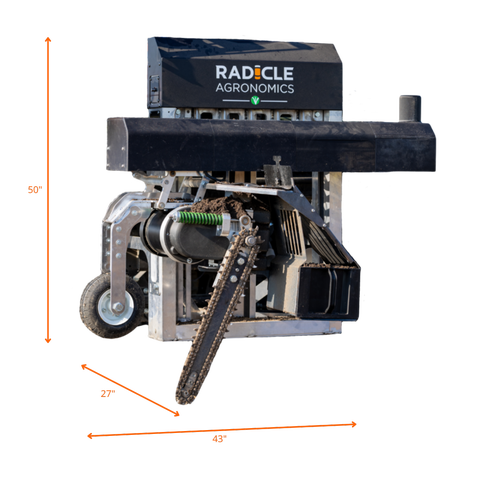
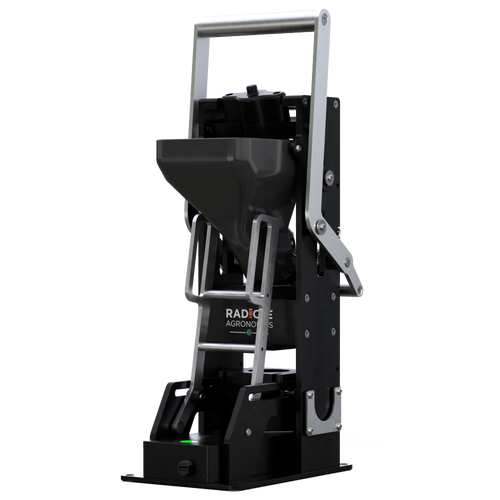
- Dimensions: 50” W x 43” H x 27”
- Weight: 200lbs
- Generator with inverter required for power
- Includes GeoPress Lite mounting plate (GeoPress Lite purchased separately)
- Availability: Beta testing Fall 2026, limited commercial release Fall 2027
How GeoKnife Works
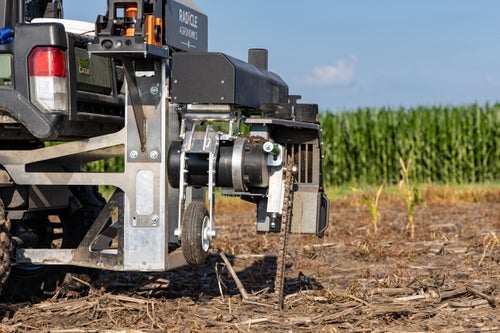
1. Set the sampling depth
Position GeoKnife at the planned sampling location and set your preferred sample depth. Consistent depth control helps limit the variability caused by nutrients being concentrated at different points and levels in the soil profile.
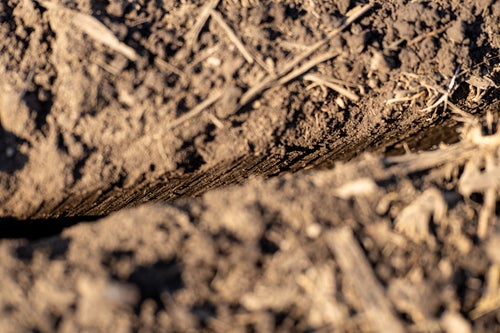
2. Collect across the row
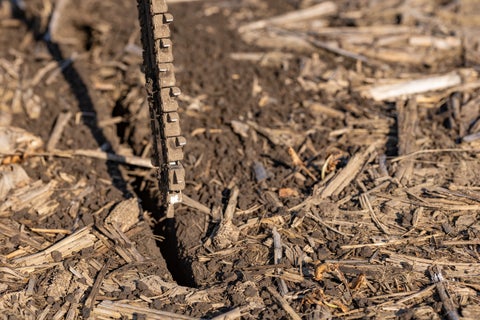
GeoKnife mechanically excavates a uniform slot across the soil profile. A standard sample collected 8 inches deep across a 30-inch row produces approximately 6 to 8 cups of soil, depending on soil type.
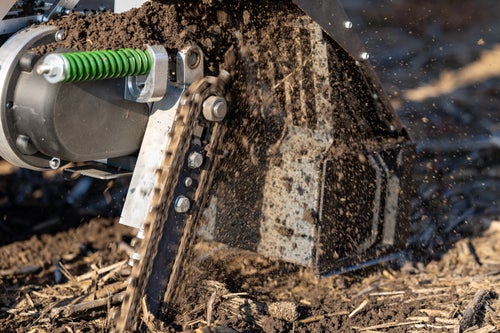
3. Combine a larger volume of soil
The collected soil provides the equivalent of approximately 48 traditional cores, giving the sample greater representation across the collection area. A standard 8-inch by 30-inch sample takes about 35 seconds to collect.
GeoKnife In Action
Flexible packaging & labeling options
GeoKnife gives you an efficient, consistently homogenous sample, but it still needs to be packaged and labeled before we can analyze it with Radicle Lab. Choose the tool that works best for you.
Ask your agent about purchase or rental options.
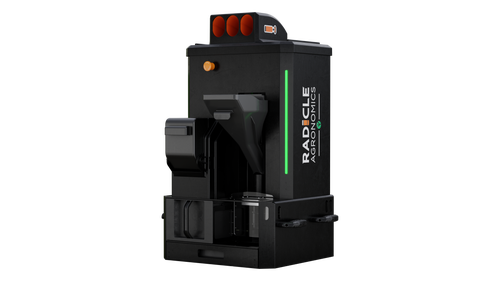
GeoPress
Automatically packages and geo-references samples in GeoTubes on your way to the next sample site.
GeoPress Lite
Manually load and package GeoTubes while it automatically geo-references them for you.
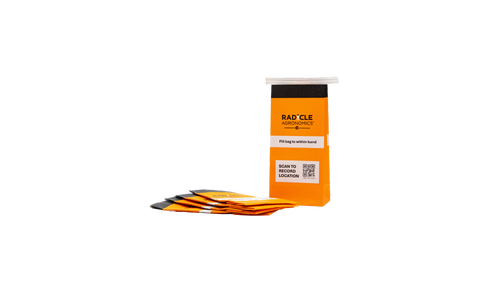
GeoBag
QR coded sample bags you fill and scan with the Radicle App to automatically label and geo-reference.
Start with a Radicle Agent
Interested in GeoKnife? Contact your local Radicle agent to discuss options for rental or purchase.
Frequently Asked Questions
What you need to know about GeoKnife from Radicle Agronomics.
GeoKnife will be in beta testing for Fall 2026, with commercial availability expected in Fall 2027.