Ground-Breaking Technology
from Radicle
Radicle Summit 2026
What to Expect
Good fertility decisions start with a soil sample you can trust. But pulling a probe several times in a field does not always give the full picture. Fertilizer bands, nutrients concentrated near the surface (stratification) and natural field variability can cause soil-test results to change depending on exactly where and how deep each core is pulled. In one banded field, individual phosphorus readings ranged from 5 to 35 ppm. That is a big enough spread to change a fertilizer recommendation and potentially lead to applying too much or too little.
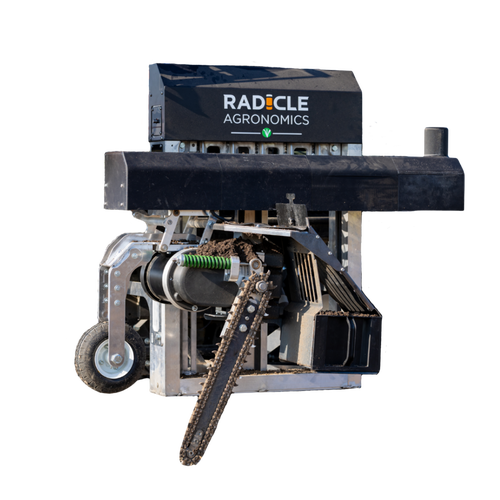
GeoKnife takes a different approach by collecting one continuous slice of soil instead of relying on a handful of individual cores. A 30-inch-long sample taken at 8 inches deep collects about the same amount of soil as 48 traditional cores, helping capture fertilizer bands and nutrient variability across the row. In field testing, GeoKnife produced a phosphorus result of 36 ppm compared with 34 ppm from a fully excavated and mixed reference sample. In a banded fertility system, it also reduced variation between repeated phosphorus samples from 22% with a 12-core automated probe to just 9%.
For farmers, better repeatability means more confidence that changes in a soil test reflect what is happening in the field, not differences in how the sample was collected. That makes it easier to see whether past applications are moving fertility toward the target, compare results from one sampling cycle to the next and build recommendations around better information. Farmers can also return to benchmark locations to track the results of their fertility program while sampling additional areas to learn more about variability across the field. Whether nutrients are applied at one rate or with a variable-rate prescription, a more representative sample gives farmers and agronomists a better starting point for putting fertilizer dollars where they can do the most good.
Featured Products
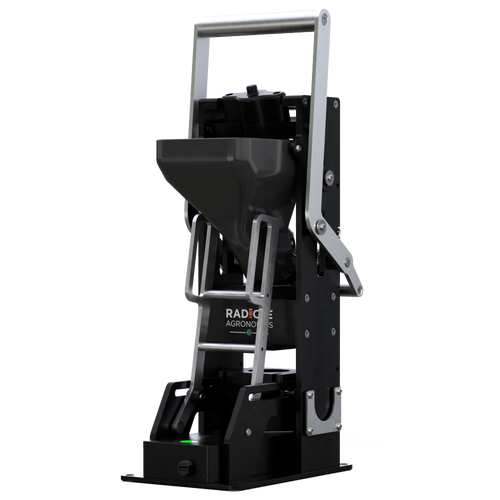
- GeoKnife » Sample a cross-section of your soil profile