Opportunities in Soil Analysis:
Small Differences, Big Impact
Radicle Summit 2026
What to Expect
A good fertility plan depends on more than collecting representative soil samples. The lab analyzing those samples also needs to deliver consistent results. Testing of identical, homogenized soils found large differences in reported phosphorus and potassium values across commercial soil labs. Those differences could change a phosphorus recommendation by nearly 400 pounds of P2O5 per acre or shift a potassium recommendation by more than 1,000 pounds of K2O per acre. When soil test values drive fertilizer rates, small variations inside the lab can quickly become large differences in input costs across your farm.
Our research also followed identical soil samples through the same labs over several months to measure repeatability. In a 43-acre field sampled on 2.5-acre grids, the range between a lab’s lowest and highest results changed projected phosphorus and potassium costs by $66 to $86/A at the commercial labs evaluated. Radicle Lab reduced that range to about $32/A, roughly half the variability. The findings show why you should look beyond whether a lab passes a proficiency program and ask how repeatably it can test everyday samples over time.
Much of the variation can be traced to routine laboratory steps, including oven drying, measuring soil with a scoop, preparing extraction chemicals, gravity filtering and calibrating analytical equipment. Radicle Agronomics is designed to reduce these sources of error by analyzing field-moist soil, weighing each sample, controlling chemical quality, pressure filtering and conditioning solutions for more consistent analysis. Better control inside the lab produces soil data you can trust when deciding where fertilizer is needed, where rates can be reduced and how to get more value from every fertility dollar you invest.
Featured Products
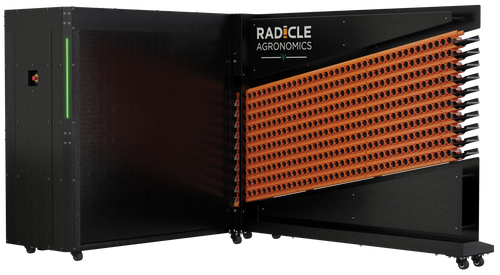
- Radicle Lab » High-powered analysis that delivers reliable data to inform smarter decisions.